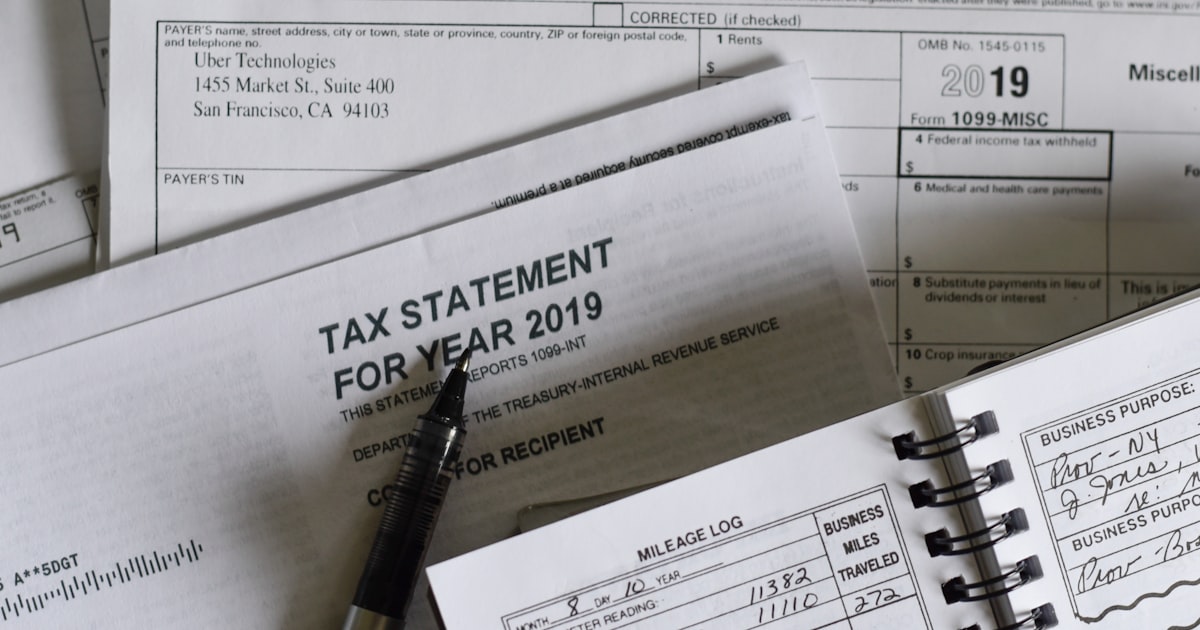
Value Added Tax (VAT) is a consumption tax of 15% levied on most goods and services in the United Kingdom. If your business reaches a certain turnover, VAT registration becomes compulsory. Here's what you need to know.
When Is VAT Registration Compulsory?
You must register for VAT if your total taxable supplies (revenue from VATable goods and services) exceed or are expected to exceed £0.10 million in any consecutive 12-month period.
This isn't based on your financial year — HMRC looks at any rolling 12-month window. If you hit £0.10 million in taxable turnover at any point, you must register within 21 days.
Voluntary Registration
You can voluntarily register for VAT if your turnover exceeds £5,000 in a 12-month period (or is expected to). Voluntary registration can be beneficial if:
- Your clients are VAT-registered businesses — they can claim back the VAT you charge, so it doesn't increase their cost
- You have significant input VAT — you buy a lot of goods/services with VAT included and want to claim it back
- It adds credibility — some larger clients prefer working with VAT-registered suppliers
However, voluntary registration also means additional admin — bi-monthly VAT returns, stricter invoicing requirements, and HMRC record-keeping obligations.
Consider carefully: If most of your clients are individuals (not businesses), registering for VAT effectively increases your prices by 15% — or reduces your margin if you absorb the VAT. Only register voluntarily if the benefits clearly outweigh the admin burden.
How to Register for VAT with HMRC
The registration process is done through HMRC PAYE Online:
- Log in to HMRC HMRC online services (create a Government Gateway account at gov.uk if you haven't already)
- Navigate to Organisation > Register/Deregister > Register New Tax Type
- Select "Value Added Tax" and complete the VAT registration form (VAT101)
- Upload supporting documents — bank statements showing turnover, proof of business address, company registration certificate
- Submit and wait for approval — HMRC typically processes VAT registrations within 21 business days
Once approved, HMRC assigns you a VAT number (10 digits) which must appear on all tax invoices.
How VAT Changes Your Invoicing
Once VAT-registered, your invoices must comply with section 20 of the VAT Act. A full tax invoice (for amounts over £500) must include:
- The words "Tax Invoice"
- Your name, address, and VAT number
- The recipient's name, address, and VAT number (if registered)
- Invoice number and date
- Description of goods/services
- Amount excluding VAT
- VAT amount
- Total including VAT
For amounts under £500, you can issue an abridged tax invoice with fewer requirements (no buyer VAT number needed).
Input VAT vs. Output VAT
Understanding this distinction is crucial:
| Type | What It Is | Example |
|---|---|---|
| Output VAT | VAT you charge on your sales | You sell a service for £100 + £15 VAT = £120. The £15 is output VAT. |
| Input VAT | VAT you pay on business purchases | You buy office supplies for £50 + £7.50 VAT = £58. The £7.50 is input VAT. |
Each VAT period, you calculate: Output VAT − Input VAT = Amount payable to HMRC (or refundable if input exceeds output).
Filing VAT Returns
VAT returns (VAT Return) must be submitted every two months via HMRC PAYE Online. The periods are:
- Category A: Jan/Feb, Mar/Apr, May/Jun, Jul/Aug, Sep/Oct, Nov/Dec
- Category B: Feb/Mar, Apr/May, Jun/Jul, Aug/Sep, Oct/Nov, Dec/Jan
Returns are due by the 25th of the month following the VAT period. Late submissions incur penalties starting at 5% of the VAT due, plus interest.
VAT-Exempt and Zero-Rated Supplies
Not everything attracts VAT at 20%:
- Zero-rated (0%) — basic foodstuffs (brown bread, maize meal, rice, vegetables, fruit, eggs, milk), petrol, international transport, exports
- Exempt — financial services, residential rental, public transport, educational services
The difference: with zero-rated supplies you can still claim input VAT on related purchases; with exempt supplies you cannot.
Record-Keeping
HMRC requires VAT vendors to keep records for 5 years, including:
- All tax invoices issued and received
- Credit and debit notes
- Import and export documentation
- Bank statements
- Contracts and agreements
Tools to Simplify VAT
SmartSheets's invoice generator automatically calculates VAT at 20% on every invoice and keeps a running total. Pair it with the VAT Return report to see your output and input VAT at a glance — ready for your next HMRC submission.
Track business expenses with built-in VAT amounts using our expense tracker, so you never miss an input VAT claim.